One thing that is very clear to someone like me with English heritage is how much similarity there is between Christchurch and Great Britain. It is pretty well known that there is a strong affinity between NZ and the UK but it is interesting just how much they are connected, both today and through the last 200 years.
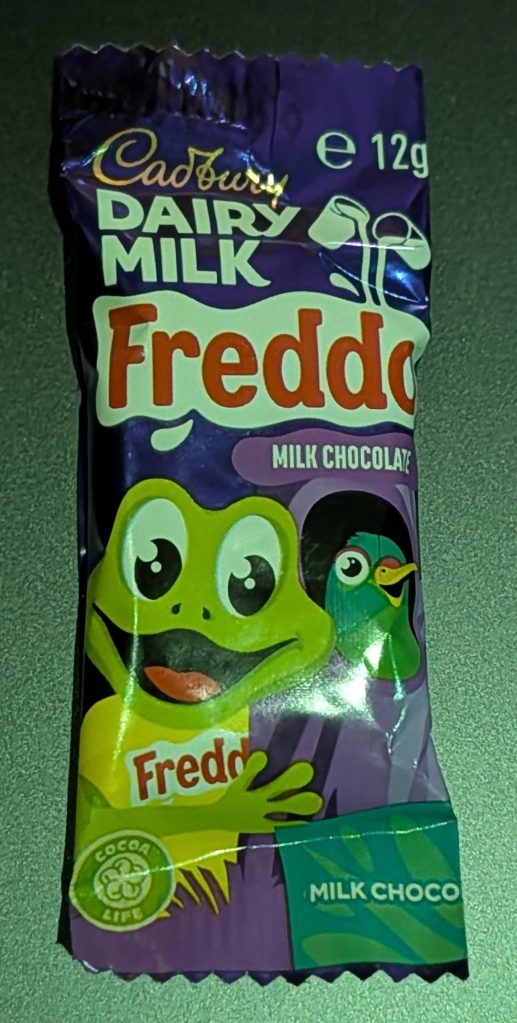
To start with, today NZ has Cadbury Freddo chocolates (a family favourite in the UK) which Canada, sadly, has not prioritized (although wine gums are available in Canada which does make up for this). But more seriously, the British were involved at the origins of today’s New Zealand.
The 1840 Treaty of Waitangi was a landmark treaty between the Māori and the British and helped to stabilize relations in what was becoming an increasingly fractious society before then, not least on account of the access to muskets by different Māori tribes seeking to gain superiority. The Musket Wars (https://en.wikipedia.org/wiki/Musket_Wars) were a devastatingly clear manifestation of the escalation that followed that eventually culminated in the 1840 treaty that British and dominant Māori tribes agreed upon. Before then, Maori tribes fought for superiority among themselves using traditional weaponry. Skirmishes were common but not existential in magnitude. However, the introduction of the musket changed all that and escalation was common. However, the language is controversial:
- Article 1. In the Māori text, Māori gave the British ‘kawanatanga’, the right to governance, while in the English version the Māori give over sovereignty.
- Article 2. The Māori text uses ‘rangatiratanga’ in promising to uphold tribal authority that tribes had over their lands and taonga (emphasises status and authority). The English text the Queen guarantees to Māori undisturbed possession of their properties (lands forests and fisheries for as long as they wished; this emphasises property and ownership rights. Fundamentally the Māori chiefs agree to sell the land to the Queen at agreed prices but in the English text this was called the exclusive right of Preemption. – only the Crown could purchase land from Māori.
- Article 3. The Crown promises to Māori the benefits of royal protection and full citizenship. In the Māori text, the Queen agrees to give Māori the same rights and duties of citizenship as the people of England, thereby emphasizing equality and equity.
One can see where the divergence and contest appears in this dual interpretation. For more check out https://waitangitribunal.govt.nz
So the 1840 treaty (still contested) was able to bring some stability and allowed tribes and the British to co-exist a little more peacefully. However, different worldviews of land use and land ownership between the Brits and the Maori have remained: land ownership is a cornerstone of British law while Maori view the land not in ownership terms but in usage terms. I will note that this is not dissimilar to Canada today and the First Nations communities and the so-called settler government. Interestingly, the British (rather than the Americans and French) were chosen as the partner as they were seen as the lesser of three evils and more trustworthy.
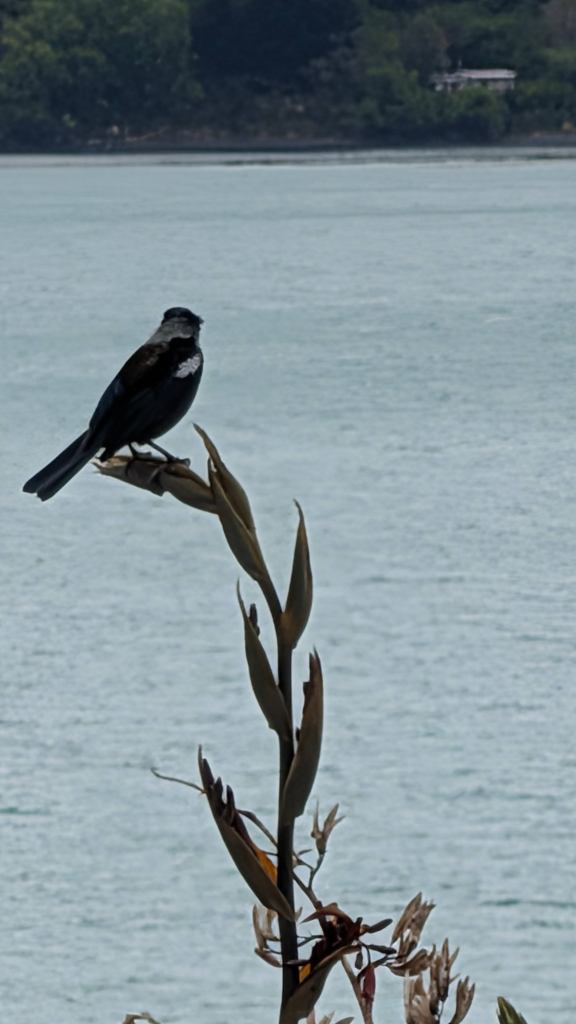
And, so we set off for the Banks Peninsula volcanic complex and Akaroa. The location is on the eastern side of the complex and comprises the second dormant volcano for the region. The road takes in Little River and then one to Duvauchelle and Robinsons Bay. Duvauchelle is a former French port which delights in its French heritage (lots of le’s and la’s). The French attempted to establish a colony in 1840 but by this time the Treaty of Waitangi had already been signed, so the French were out of luck.
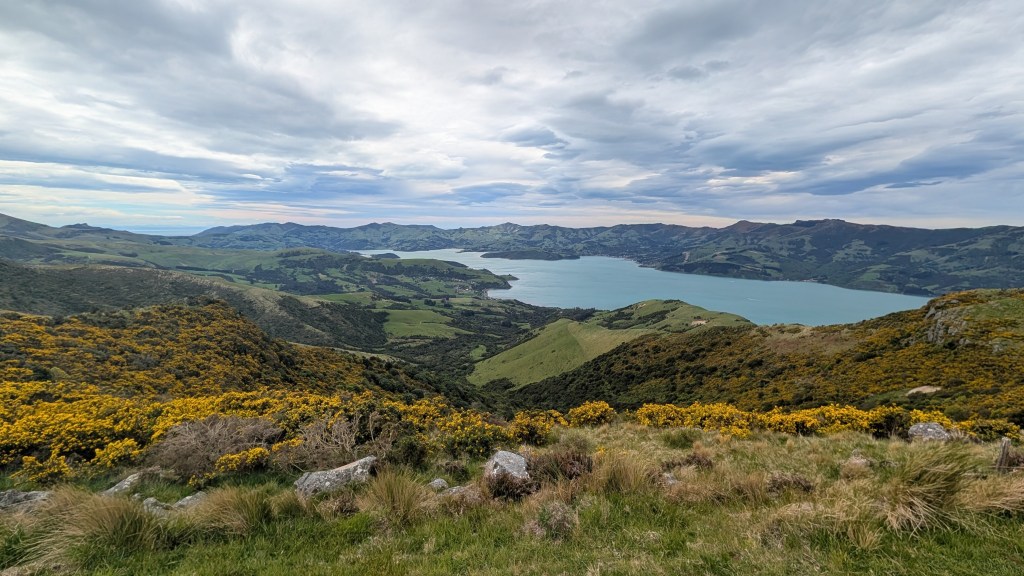
An illustrative history of particularly bloody exchange between tribes was the Te Pātaka o Rākaihautū (The Food Storehouse of Rākaihautū) region which was the fortified settlements around the peninsula’s deep natural resources (forests and ocean/river habitats). The vicious fighting and subsequent domination and retribution by the Ngāti Tahu chief, Te Rauparaha, took the heavily fortified land in a particularly grizzly yet successful attack. The surviving members of the iwi tribe moved to a new home at Ōnuku (“the place over there”) south along the shoreline. The Ōnuku Marae is the cultural heart of the tangata whenu and in monumentally in 1840 it was where the site of the first signing of the Treaty of Waitangi. Now there is an ongoing development to create a Takapūneke Heritage Reserve.
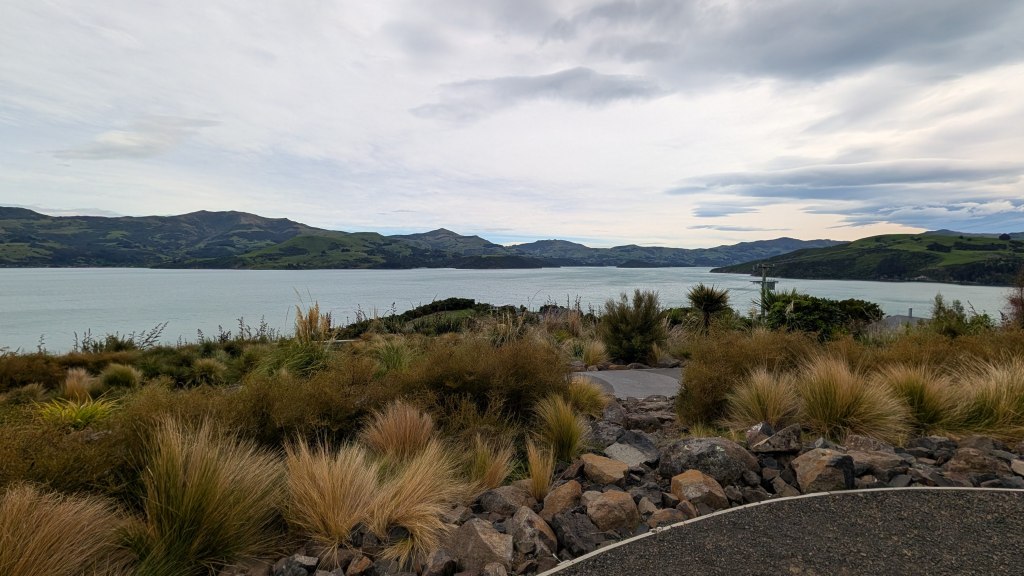
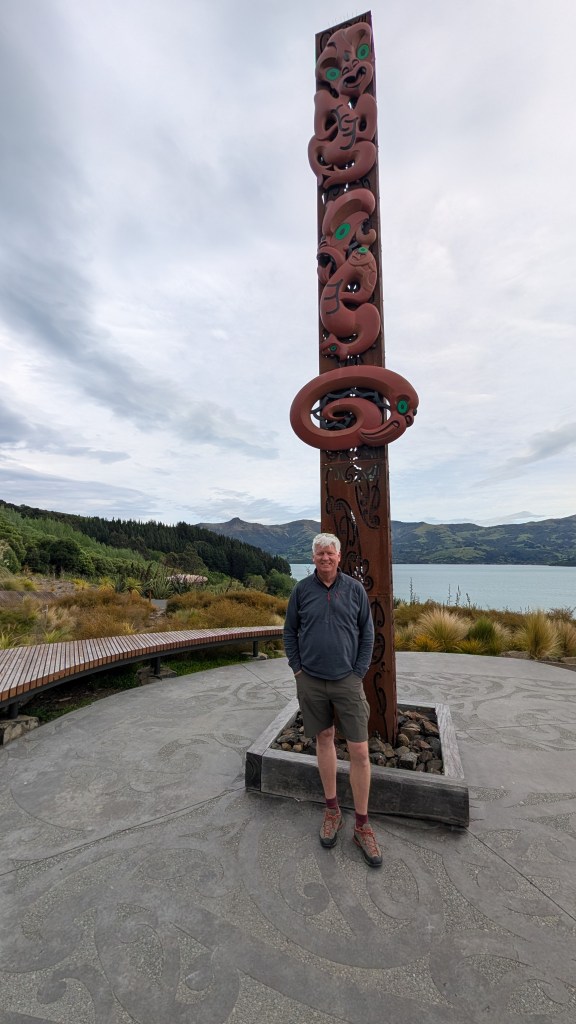
After Akaora and a quick stop for a sausage roll in Robinsons Bay, we drove back around the bay and headed due west up to the ridge line of the caldera. The breathtaking views revealed the full caldera, along with more human dynamics such as salmon and sea weed farming. Along the ridgeline and back to the Birdlings flat with sights of Peraki and Te Oka, we made it back to Tai Tapu and home.
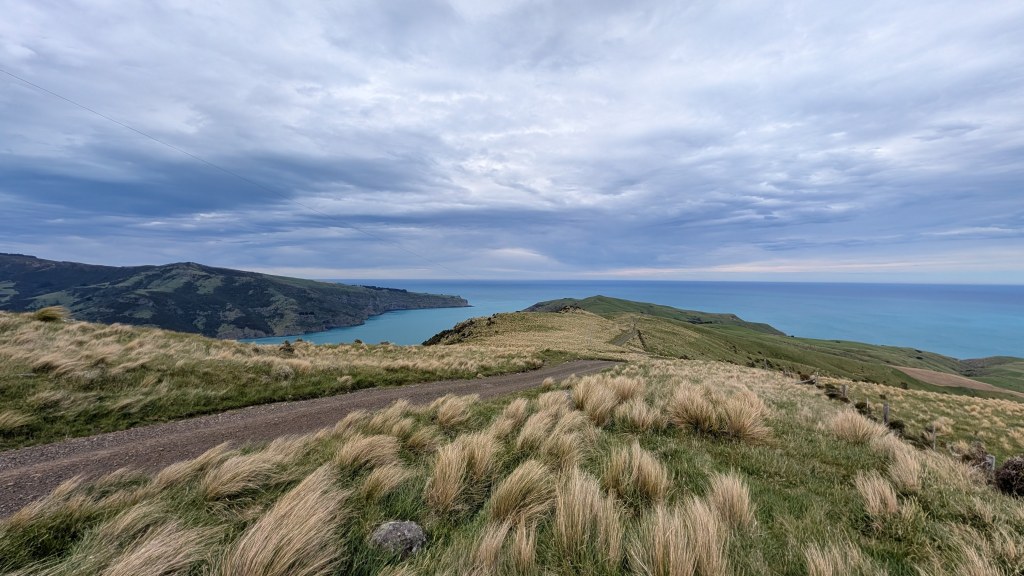
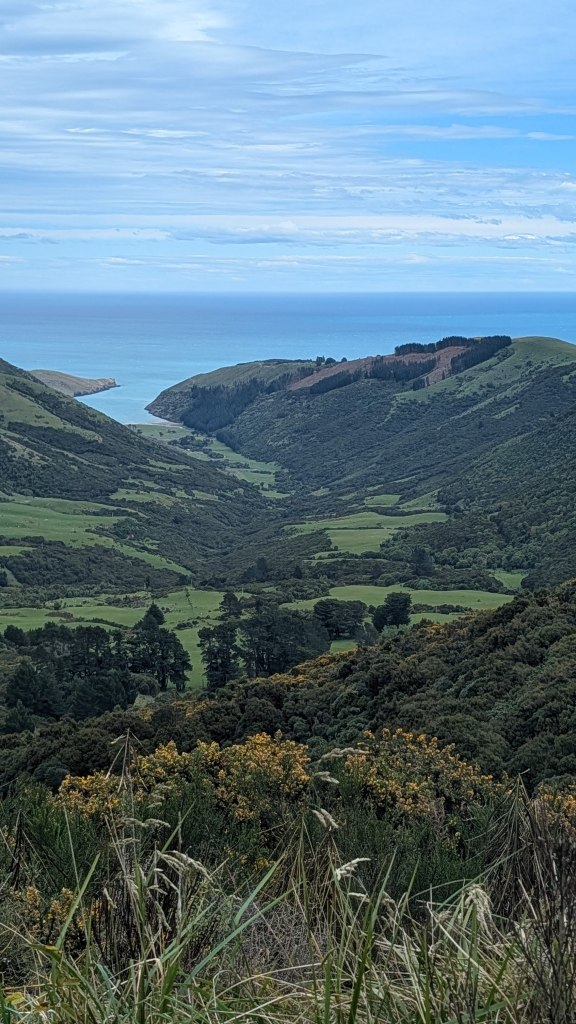
As you may have guessed this was an education for me. My guide, Tim, has a deep font of knowledge and was responsible for providing a wonderful backgrounder on NZ history (all errors in reporting are mine alone).
At the end of the day, a text from Wolfgang informed us to check in for Antarctica tomorrow at 0630-0645 at the Antarctic Passenger Terminal. So here we go, or as they say ‘the game is afoot’
*Note: the author’s skill in applying characters in WordPress is limited. The word Maori should have a macron over the a.


Leave a Reply