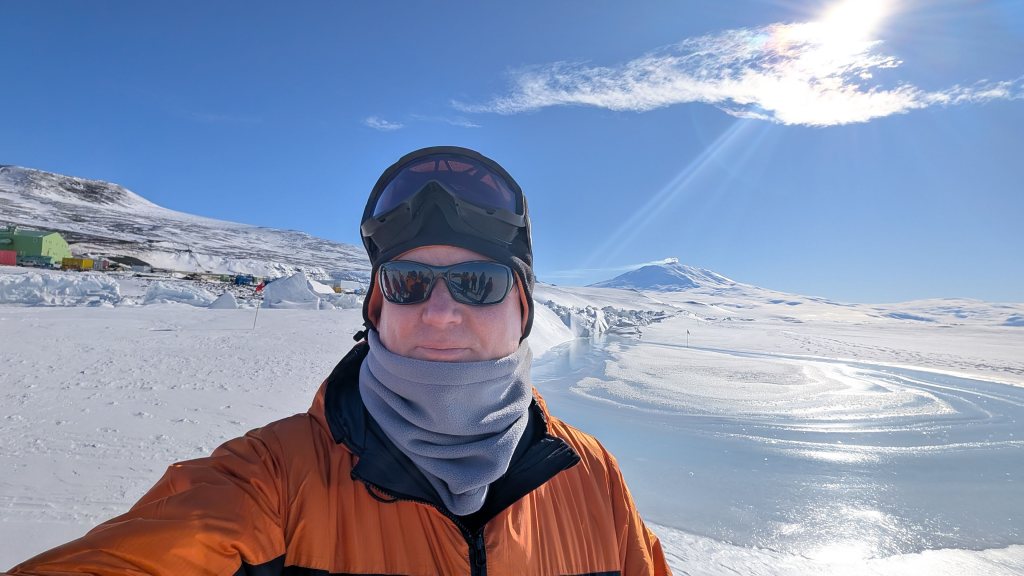
Life at Scott Base is a super relaxed place to spend time. However, it is also governed by standard operating procedures all of which require training. As a basis, any new science visitor to the base is required to complete a full training which in Canadian terms is a cross between WHMIS and outdoor wilderness training. After a repeat tour of the base was conducted we headed outside with our Extreme Cold Weather (ECW) clothing to do a walk around the base. If you think you are expert in cold weather activities, then this is a good time to try out combinations of gear and layering. Our US colleagues who are with us at the base have been issued with a much smaller amount of clothing – basically a large red parker, so-called bunny boots (designed by the US military), and gloves. Going through the AntNZ team, we have been issued with:
- a large down windproof parker
- a technical down jacket
- a windbreaker jacket
- a beanie, windproof hat and balaclava
- two pairs of merino wool socks
- two sets of merino wool thermal underwear
- two thin inner gloves, two pairs of merino wool gloves, one pair of windproof technical work gloves, one pair of thicker work gloves, one pair of large mits.
- one fleece jacket and one fleece-windbreaker
- one pair of fleece pants
- one ECW pair of boots (-50C rated)
- one pair of Sorrel boots (not ECW)
- one pair of bib pants.
- one pair of sunglasses and one pair of ski goggles
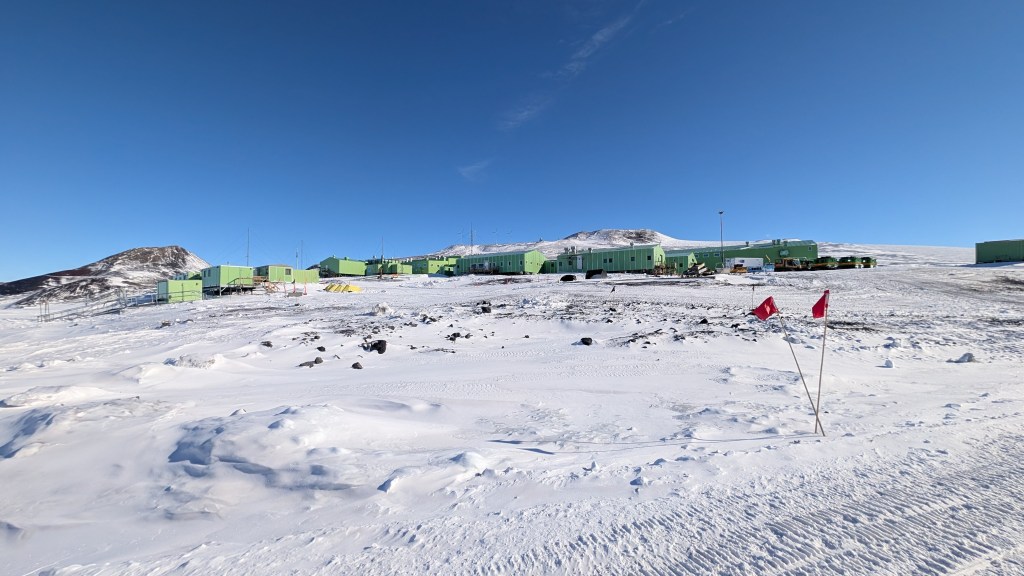
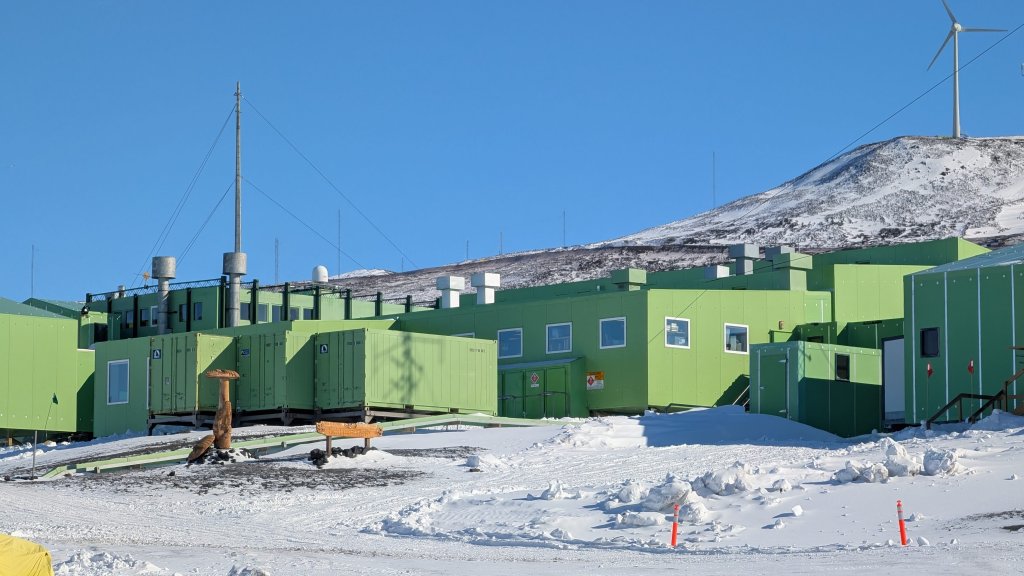
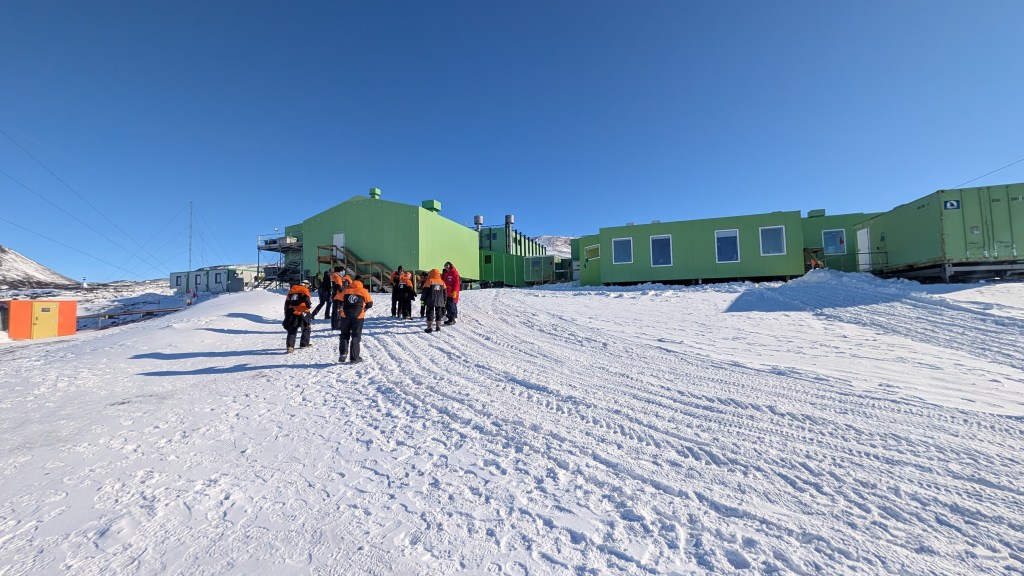
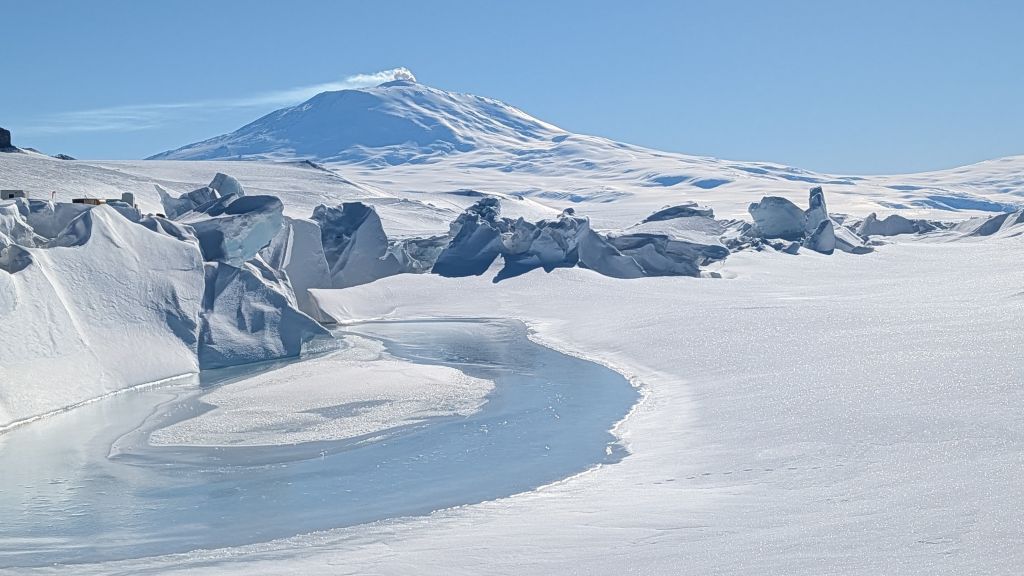
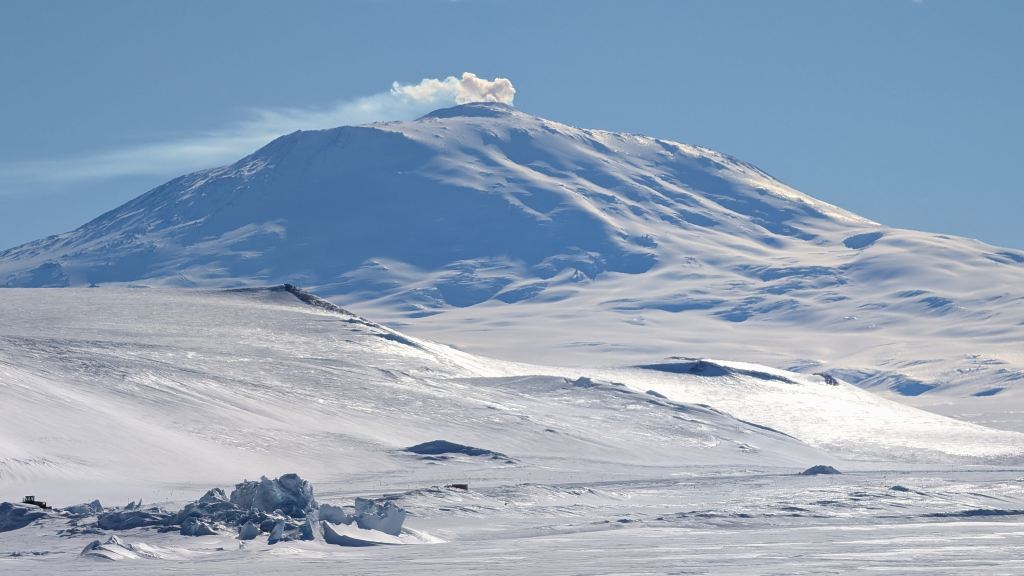
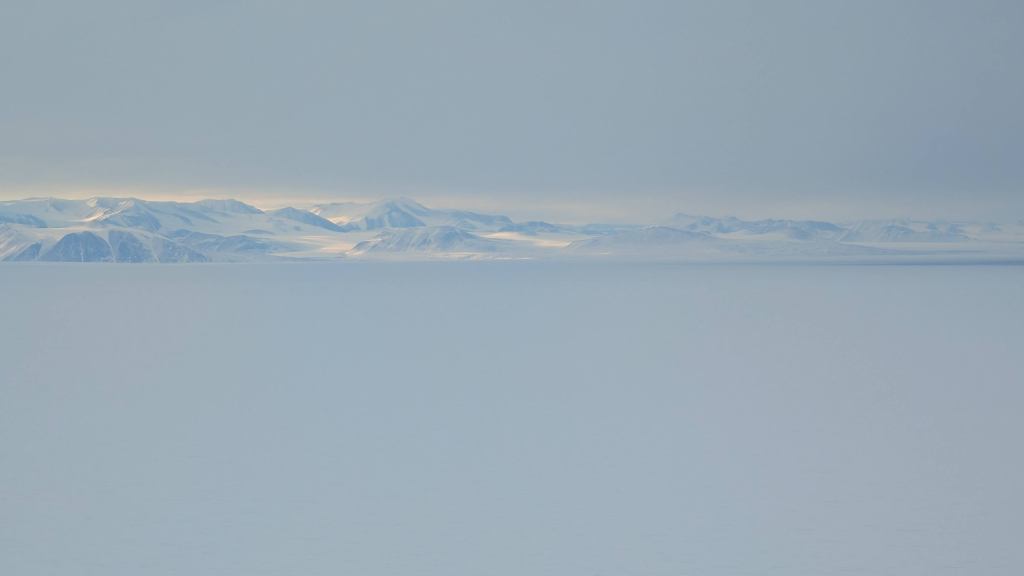
The day was clear with great views across the sea ice and towards Mt Erebus.
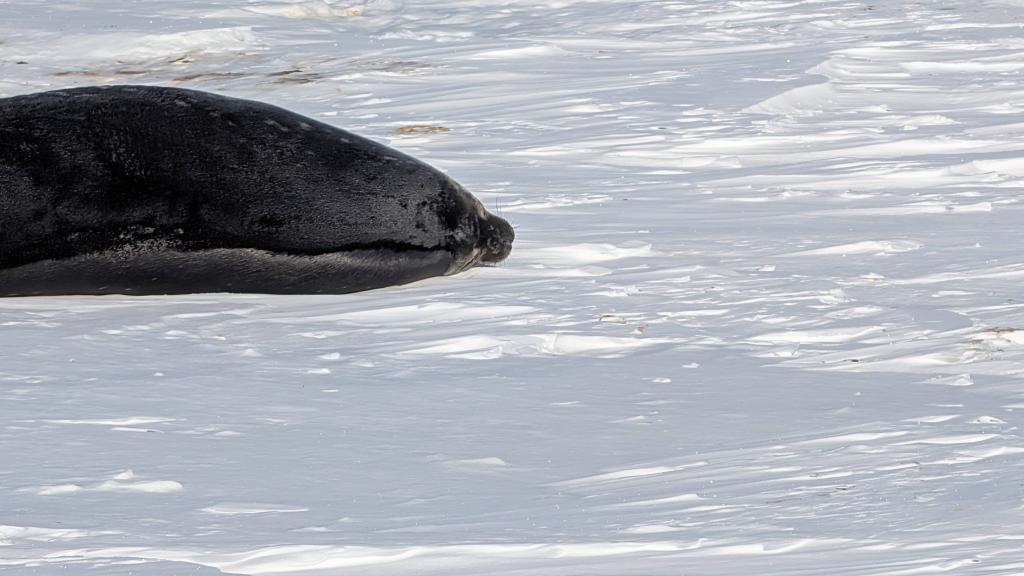
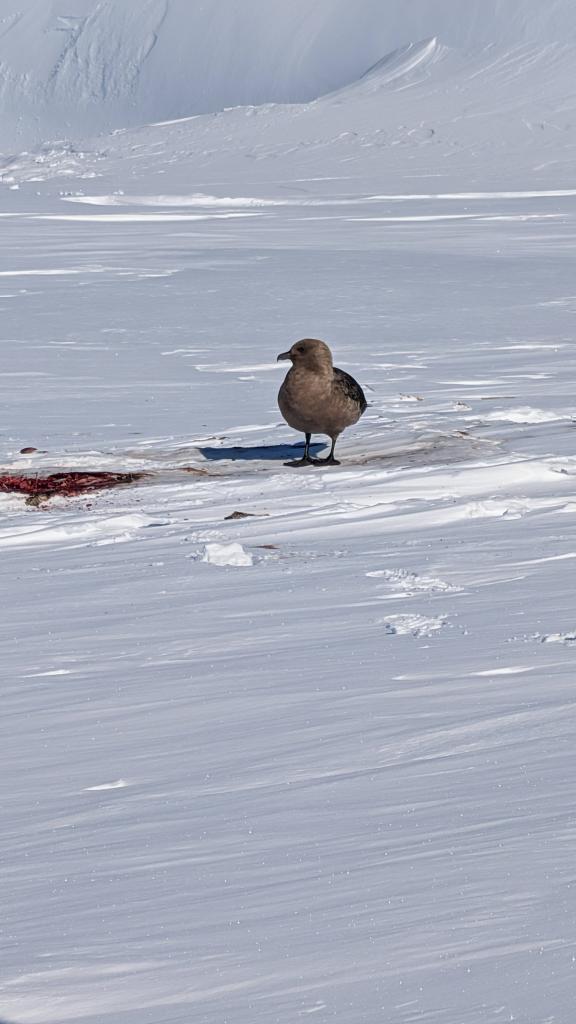
And there is wildlife too.
At Scott base, the day’s eating is divided into the usual brekkie, lunch and dinner, but interspersed by a morning and afternoon break or ‘smoko’. The smoko is an informal work or duty break traditionally used for smoking, eating a snack, or drinking tea or coffee. The term dates back to the 1850s British Merchant Navy and was picked up by Australian sheep shearers and gold seekers in the 1860s (Smoko – Wikipedia)
Followingthe afternoon smoko we settle in to preparing for an overnight wilderness camp. The plan was to go to a site about 30 minutes away, pitch a Scott tent or four, have dinner outside and sleep overnight before returning to base the following morning. With temperatures at -12C, this was not a cold exercise. But preparations were needed. Sleeping bags and mats, food and cooking equipment, water supply and cold weather gear. Lots to think about.
Water is another consideration in Antarctica. For a dry desert environment (Antarctica has about 160 mm of precipitation a year) it is dry, very dry. And for humans dehydration can be an issue. So we have to drink water, a lot…5 litres a day is the recommendation which means that we pee a lot too. This can make for a frequent discussion around hydration and peeing and pooing. But it is what it is and there is no point in coyness.
At around 5 pm we set out in a Hägglunds Bandvagn headed for a site not far from Castle Rock to pitch our tents.
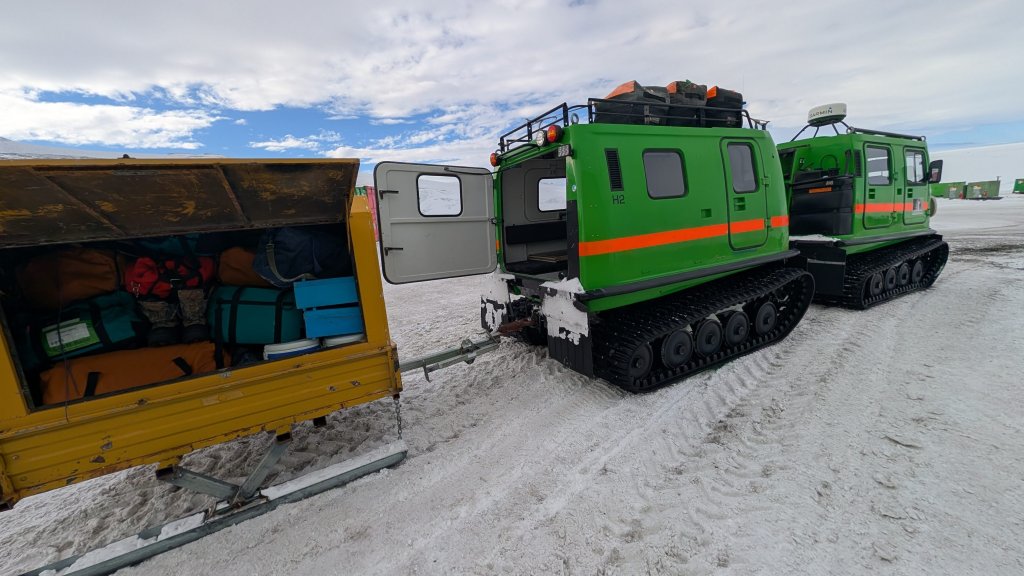
30 minutes later we were ready to pitch our tents. The tents of choice in this case were Scott tents that are the classic yellow pyramid. They are easy to erect and sleep 2 people with e footwell in the middle. The pegs are easy to drive into the hard packed snow and with a snow weighting around the tent aprons, the assemblage was complete.
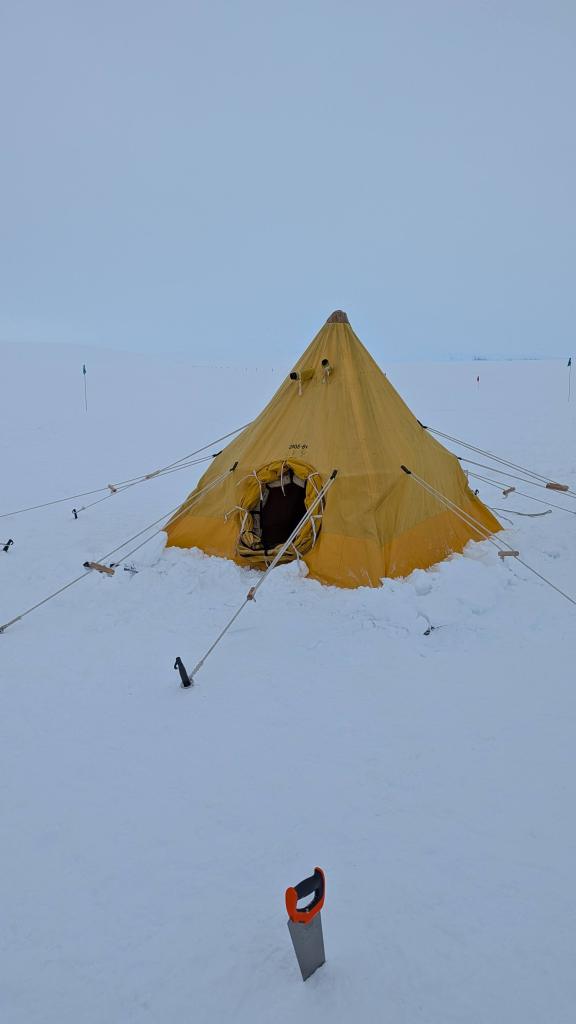
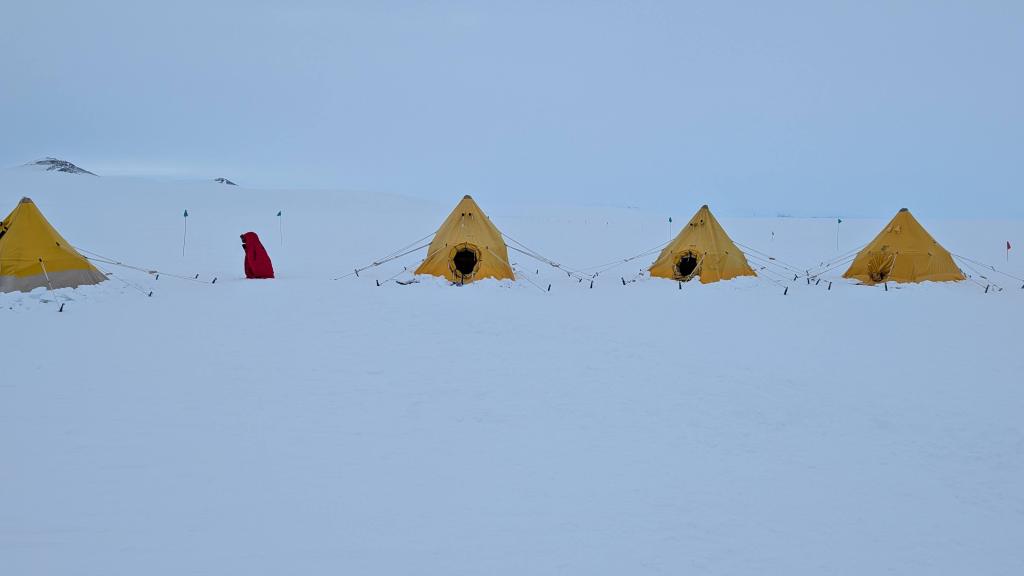
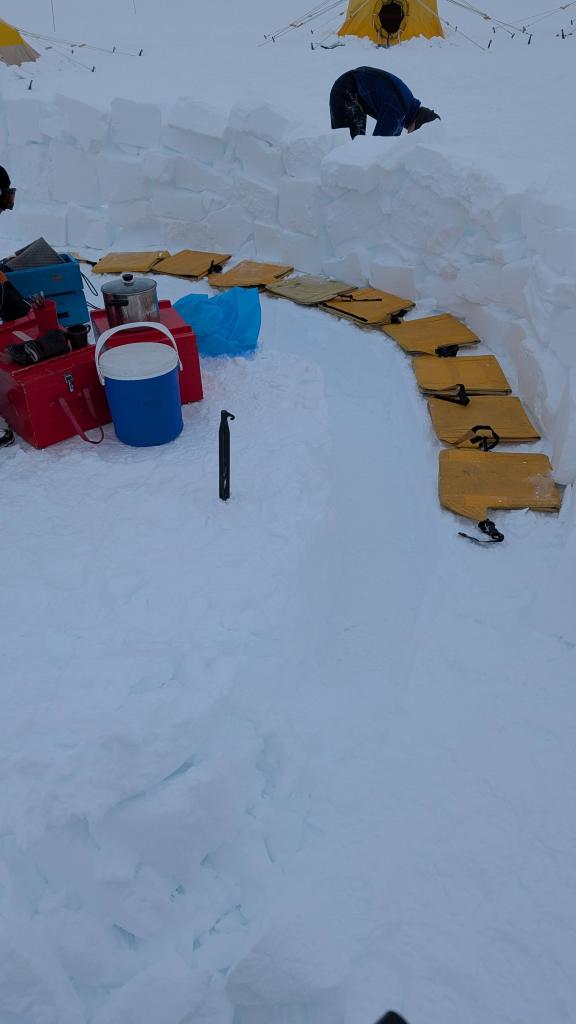
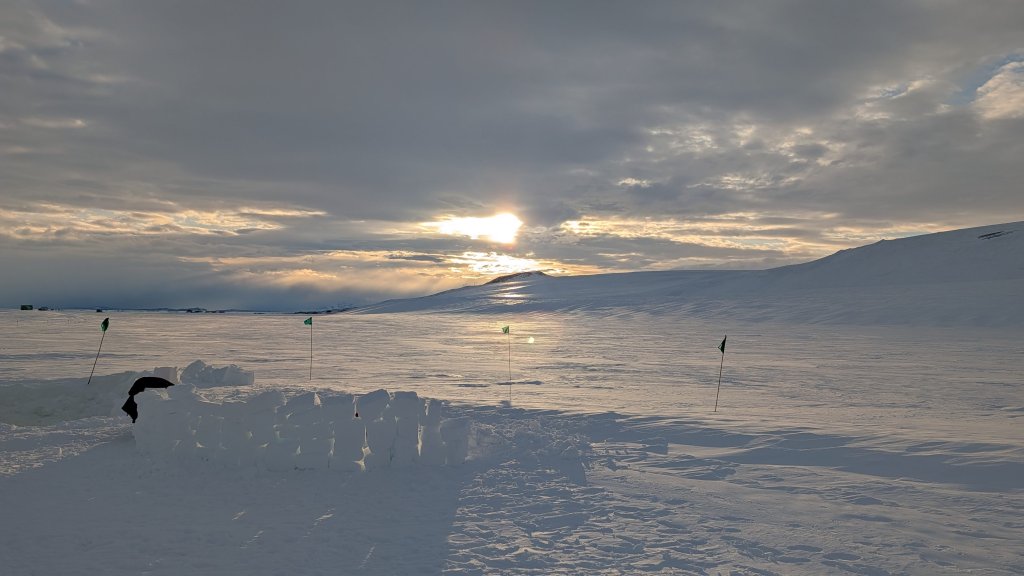
Then the kitchen area: a windbreak of snow blocks, a table and a footwell with seats. The food was freeze-dried back country food (just add water) which was surprisingly good – the last time I had freeze-dried food was in 1986 in Zermatt – it has come a long way since then).
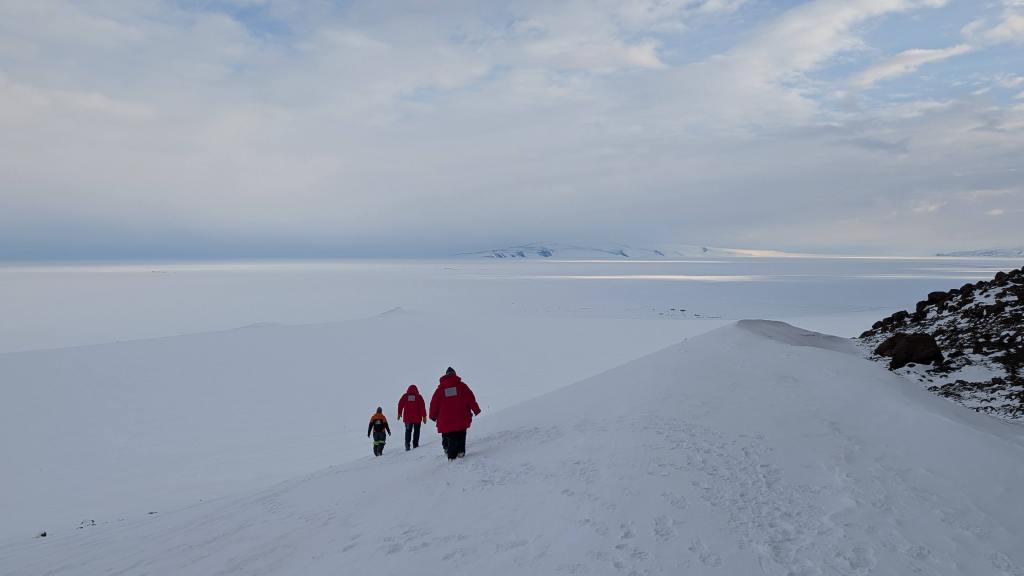
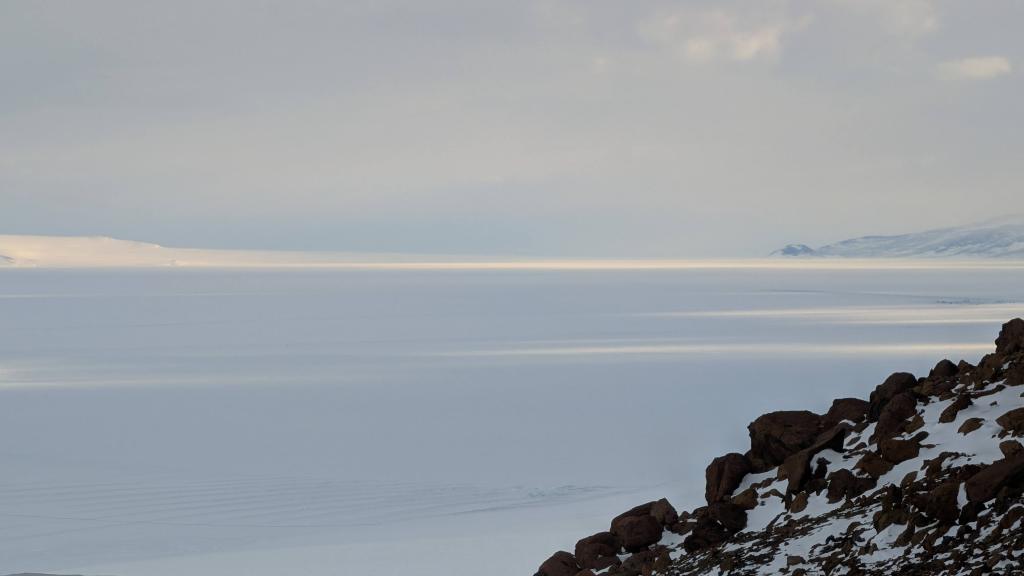
After dinner it was time for a walk to Castle Rock which was above the campsite.
And then bed. Sleeping in a tent in Scott tent inside two sleeping bags and a sleeping bag liner while drinking up to five litres of water a day, is not too much fun. But we survived and surprisingly we slept……
…. to be continued.


Leave a Reply